
Searching Osborne County Civil Dockets
The Kansas Public Access Portal is the place to begin. Accept the terms and pick District. You can then search by Case Number, Party Name, Business Name, or Party As Business Name. The last two labels serve different purposes, so match the portal's wording to the party you want. Enter your term. Use the Additional Search Filters. Narrow by Civil, date of birth, or a filing-date range.
A current Osborne civil number looks like OB-YYYY-CV-000000. Cases filed before the county's 2022 eCourt transition may carry an older year, type, and sequence format without OB. Numbers beat names. With a common name, check the county, court, filed date, case group, party role, and judge on every result before trusting it.
- Select District and the right search type.
- Enter the known number, party, or business name.
- Add Civil or a filing-date range when useful.
- Complete the Human check and submit.
- Confirm Osborne County and the intended party role.
- Read the events index from the first filing to the newest event.
Osborne Civil Portal Filters
Civil in the portal covers CV matters, but not every noncriminal dispute lands under that label. Family matters use FAM. Probate or Mental Health uses PR. These portal groups do not match the filing categories in the annual civil report, so a narrow filter can hide the record if you guess the category wrong.
| Search field | Purpose | Caution |
|---|---|---|
| Case Number | Find one known case | Preserve OB and hyphens when present |
| Party Name | Find a person in a party role | Confirm court, date, and role |
| Business Name | Find a named entity | Not the same as Party As Business Name |
| Civil | Narrow to CV | Does not include every FAM or PR matter |
| File Date | Narrow the filing window | It is not a hearing-date filter |
Getting zero results? Strip out any guessed category or date range, fix the spelling, and try the case number you know. The courthouse terminal and the clerk remain the fallbacks. Osborne County has no separate civil portal.
Inside an Osborne County Civil Docket
The dated list most people call a docket is, in Kansas, an events index. It can show the start of a civil action, service steps, an answer, motions, and settings. Signed orders, judgment, and post-judgment work may appear too. One label rarely tells the whole story. Remember that a motion entry is a request, not a ruling. A notice of setting gives a date. That date may later be reset.
| Case header | Case number, court, filed date, case group, status, and assigned judge. |
|---|---|
| Party block | Plaintiff and defendant, or petitioner and respondent, with procedural roles. |
| Filings | Petition, complaint, answer, response, exhibit, or other filed-item labels. |
| Motions and orders | Separate requests, hearing events, rulings, and signed orders. |
| Disposition | Dismissal, judgment, nonsuit, default, trial result, or other recorded outcome. |
| Later events | Garnishment, execution, satisfaction, abstract, or appeal activity. |
A field label does not mean its image is open online. When you need an official ruling, request the signed order.
Osborne Civil Filing Mix
The official Civil Filings report for the period ending June 30, 2024 counted 106 Osborne filings: 14 regular actions, 61 limited actions, and 31 domestic-relations matters. Within the regular group were five contract, three other, four real-property, and two tort filings. Every limited action shown fell in the contract column.
Marital-status, protection, and Parentage Act categories made up the domestic-relations total. These statistics count filings during a period, not current active cases, documents, or judgments. The official civil report gives context, while each case's own events index tells its history.
Civil Case Types on the Docket
Osborne County District Court is a general-jurisdiction court. Regular contract, tort, and real-property suits are heard there. Limited actions and small claims are too. Family, protection, probate, and mental-health matters are also District Court case types. Portal grouping and public-document rules differ. No separate Osborne probate court or county civil court exists.
- Regular civil actions include contract, tort, property, and other claims.
- Limited actions include lower-value claims handled under that Kansas procedure.
- Domestic-relations matters can include marital status, parentage, and protection filings.
- Probate or mental-health matters use the portal's PR grouping.
- Federal civil cases use the District of Kansas, not the county docket.
Role words describe procedure, not who is right. Plaintiff and defendant usually apply in civil claims, while petitioner and respondent are common in family, probate, and protection matters.
Osborne Court Files and Land Records
A real-property lawsuit is not a recorded deed. A quiet-title, foreclosure, or similar civil action sits in the Osborne County District Court docket, but the deed, mortgage, release, plat, or recorded lien belongs with the Osborne County Register of Deeds. A title question can require both custodians.
| Record sought | Correct office | What it proves |
|---|---|---|
| Civil petition or judgment | District Court clerk | What was filed or ordered in the case |
| Deed or mortgage | Register of Deeds | The recorded land instrument |
| Recorded judgment lien | Register of Deeds | The land-record filing, not the whole court file |
Match the request to the record. A portal caption cannot replace a certified judgment, and a judgment event cannot replace the recorded instrument.
Civil Docket Settings and Hearings
Civil settings may include a case-management conference, motion hearing, pretrial conference, trial, or post-judgment hearing. Read the event date, description, judge, and courtroom detail. Weigh them together. The filed date of a complaint is not the service date or first hearing date. A notice can be followed by a continuance or reset.
The clerk posts no public daily Osborne calendar. Three channels matter for court dates. They are the case event, the courthouse terminal, and the clerk. Call the clerk for an urgent appearance rather than trusting an old notice. Attorneys who file through Kansas eFlex should note one thing. That filing system is not the public docket viewer.
- Continuance
- A postponement of a setting.
- Default judgment
- A judgment entered after a required response or appearance was not made.
- Nonsuit
- A claimant's withdrawal or dismissal, distinct from a ruling on the merits.
- Journal entry
- The formal document recording a court decision.
Requesting Osborne Civil Documents
When a public document lacks an internet link, start at the courthouse terminal. For a copy, give the case number. Add the exact event or document, and the approximate date. The Kansas KORA Request Form for Court Records asks for your contact details, the specific record, delivery preference, a commercial-purpose certification, signature, and date. The custodian fills in the estimated reproduction cost.
The canonical Kansas District Court records page explains one distinction. It separates case information from court records.
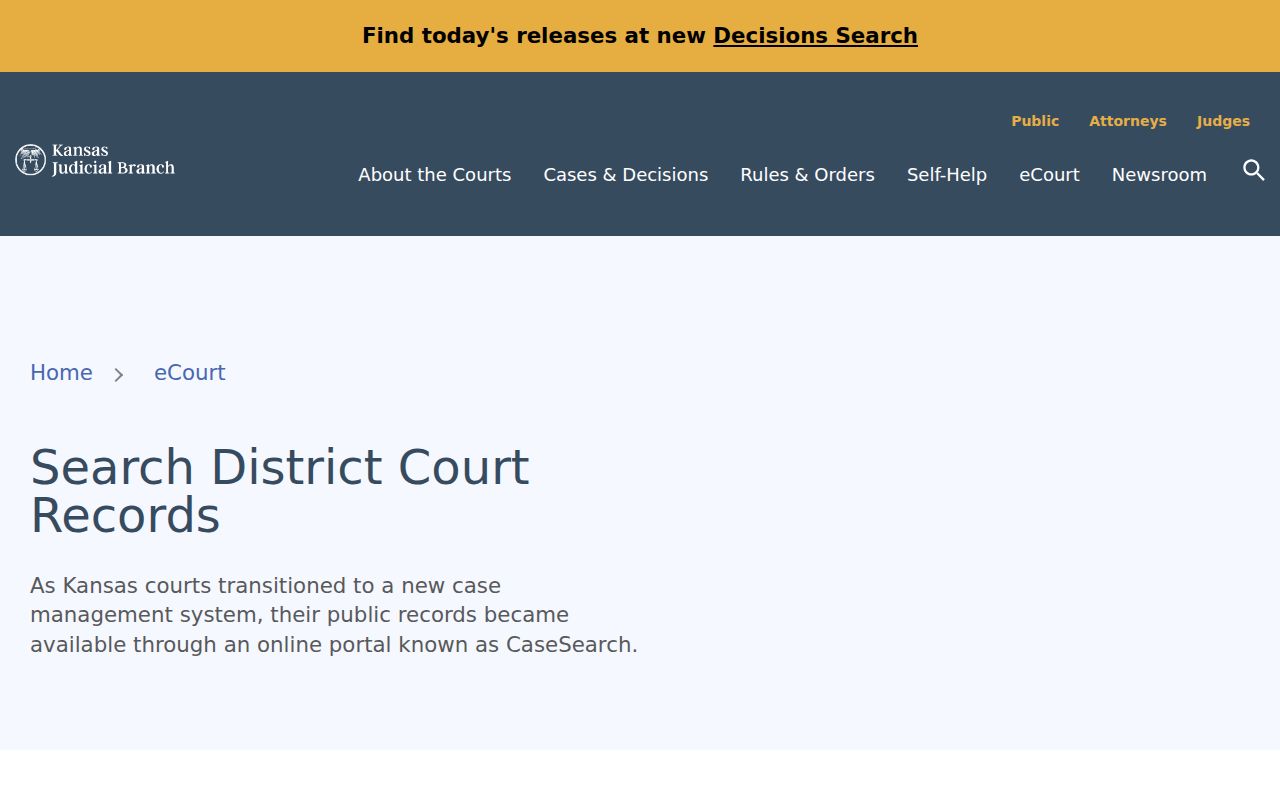
That distinction is why a portal search can locate the case while a separate clerk request is still needed for a pleading or certified judgment.
Osborne Civil Clerk Access
Civil filings in Osborne County live with the Osborne County District Court clerk. You can reach the office several ways. Use the counter, phone, fax, mail, or a written records request. A public terminal is another option. The clerk offers no direct email address. Osborne posts no online page for paying for certified copies.
Osborne County District Court
423 W Main Street
PO Box 160
Osborne, KS 67473
785-346-5911
Fax: 785-346-5992
Monday through Friday, 8:30 a.m. to
noon and 1 p.m. to 4:30 p.m.
A Judicial Branch explanation of district court records spells this out. Some case records sit on the terminal even when the internet portal will not show them.
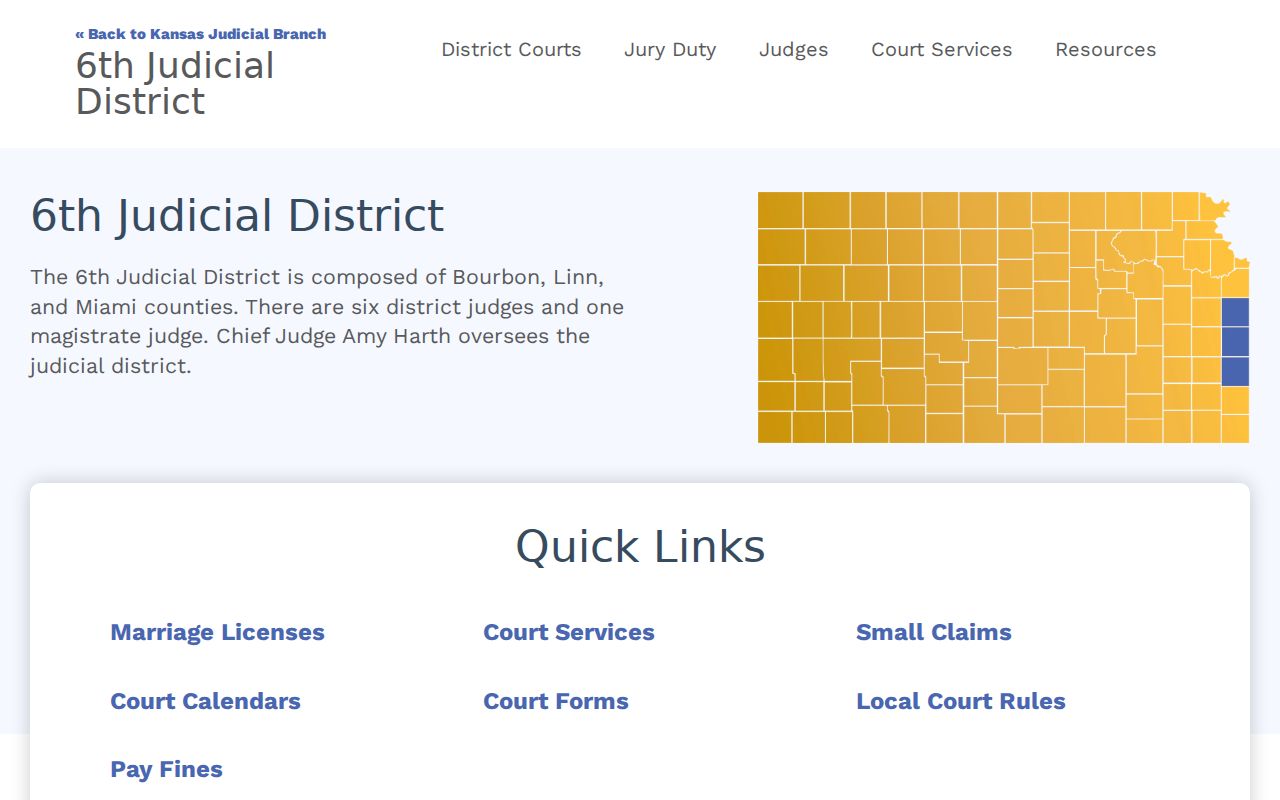
Treat the terminal as a fallback for public access. It does not promise a look at sealed family matters or other confidential documents.
Civil Docket Access Rules
Kansas puts its open-records policy in K.S.A. 45-216. The statute favors public access to records, though exceptions apply. The official legislative site carries the current text.
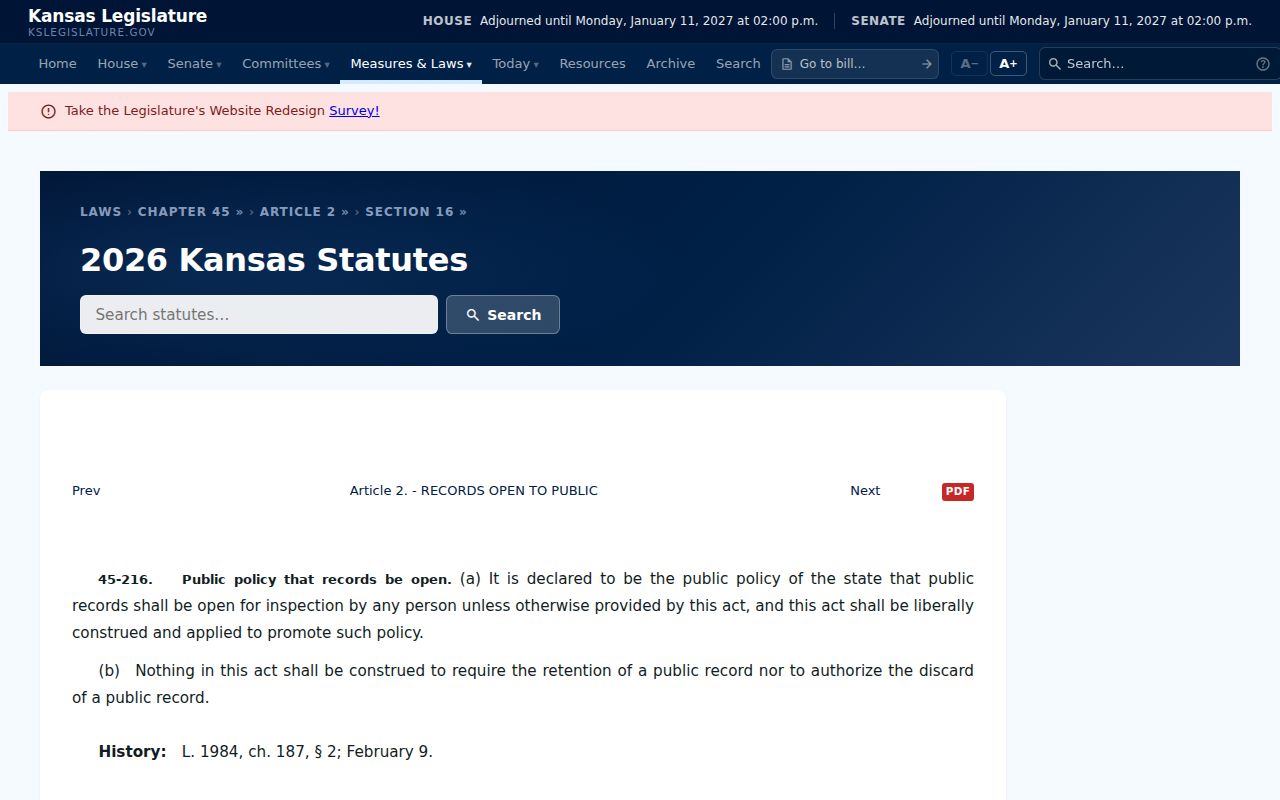
That policy sits alongside Kansas Supreme Court Rule 22, other statutes, court orders, and limits tied to particular documents. None of it puts every civil filing online for the public.
Rule 22: Custody, support, dissolution, parentage, guardianship, protection, poverty-affidavit, and other sensitive documents can have tighter access than the case information or events index.
K.S.A. 45-218 governs inspection and requires a response by the end of the third business day. Exemptions are listed in K.S.A. 45-221. That statute also lets an office separate exempt portions and release the rest. So a missing document does not prove the whole case is sealed.